| Spinning pads | Self-rinsing roller | |
|---|---|---|
| How it cleans | Two pads spin with downward pressure | Roller sprayed with clean water and scraped as it turns |
| Sticky / greasy floors | Good | Excellent |
| Edge reach | Excellent (pads swing out) | Good (rollers extend on some models) |
| Rugs | Lift high or detach | Lift, but less clearance on deep rugs |
| Examples | Dreame X60 Max Ultra, Qrevo S Pro (vibrating: Saros 20 Sonic) | Deebot X9 Pro Omni, Qrevo Curv 2 Flow, eufy Omni C28 (track: Narwal Flow 2) |
Spinning pads
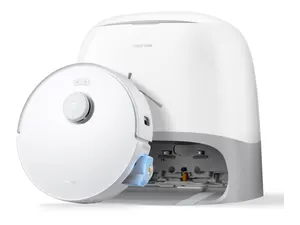
Two round pads scrub with pressure and can swing outward to reach skirting boards. They get dirtier as they go and rely on the dock to wash them between rooms, but they lift high on carpet and some can be left in the dock entirely.
Self-rinsing rollers
A cylindrical roller is sprayed with clean water and scraped as it turns, so the floor is always wiped with a fresh surface. It's the better answer to sticky kitchens and muddy entryways.
Our recommendation
- Mostly hard floors, lots of cooking: a roller; see the best robot mops.
- Mixed rugs and hard floors: spinning pads; see the best vacuum-mop combos.
Prices change often on Amazon. Check the live price before you buy.
Frequently asked questions
Which mop type is better for kitchens?
Roller mops, because they're rinsed continuously and don't spread grease around the room.
Which is better for homes with lots of rugs?
Spinning pads usually lift higher or detach, so they're safer for rug-heavy homes.
Keep reading
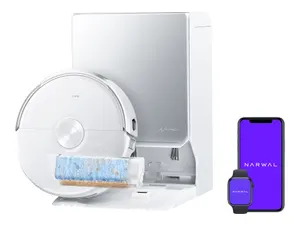 Best OfBest robot mopsThe best robot mops for 2027: roller, track and vibrating-mop robots ranked for scrubbing, edge reach, hot-wat…
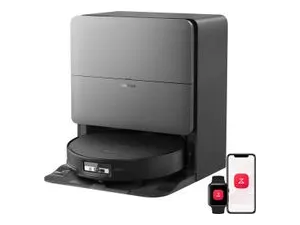 Best OfBest vacuum + mop combosThe best robot vacuum and mop combos for 2027: robots that vacuum and mop in one run, keep rugs dry, and wash …
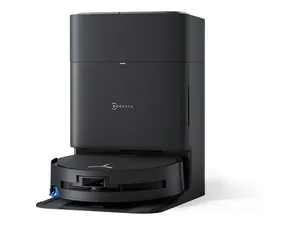 ReviewsDeebot X9 Pro Omni reviewOur Ecovacs Deebot X9 Pro Omni review: OZMO roller mop, 16,600 Pa suction, hot-water wash, dToF LiDAR, Matter,…
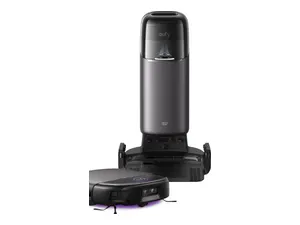 Reviewseufy Omni S2 Pro reviewOur eufy Omni S2 Pro review: HydroJet 3.0 roller mop, 40,000 Pa suction, UV-C, hot-water dock, pros, cons and …
 ComparisonsEcovacs vs RoborockEcovacs vs Roborock in 2027: Deebot X9 Pro Omni vs Qrevo Curv 2 Flow on roller mopping, suction, navigation, a…
 ComparisonsRobot vs stick vacuumRobot vacuum vs cordless stick vacuum: daily maintenance vs deep cleaning, stairs, upholstery, cost and time s…